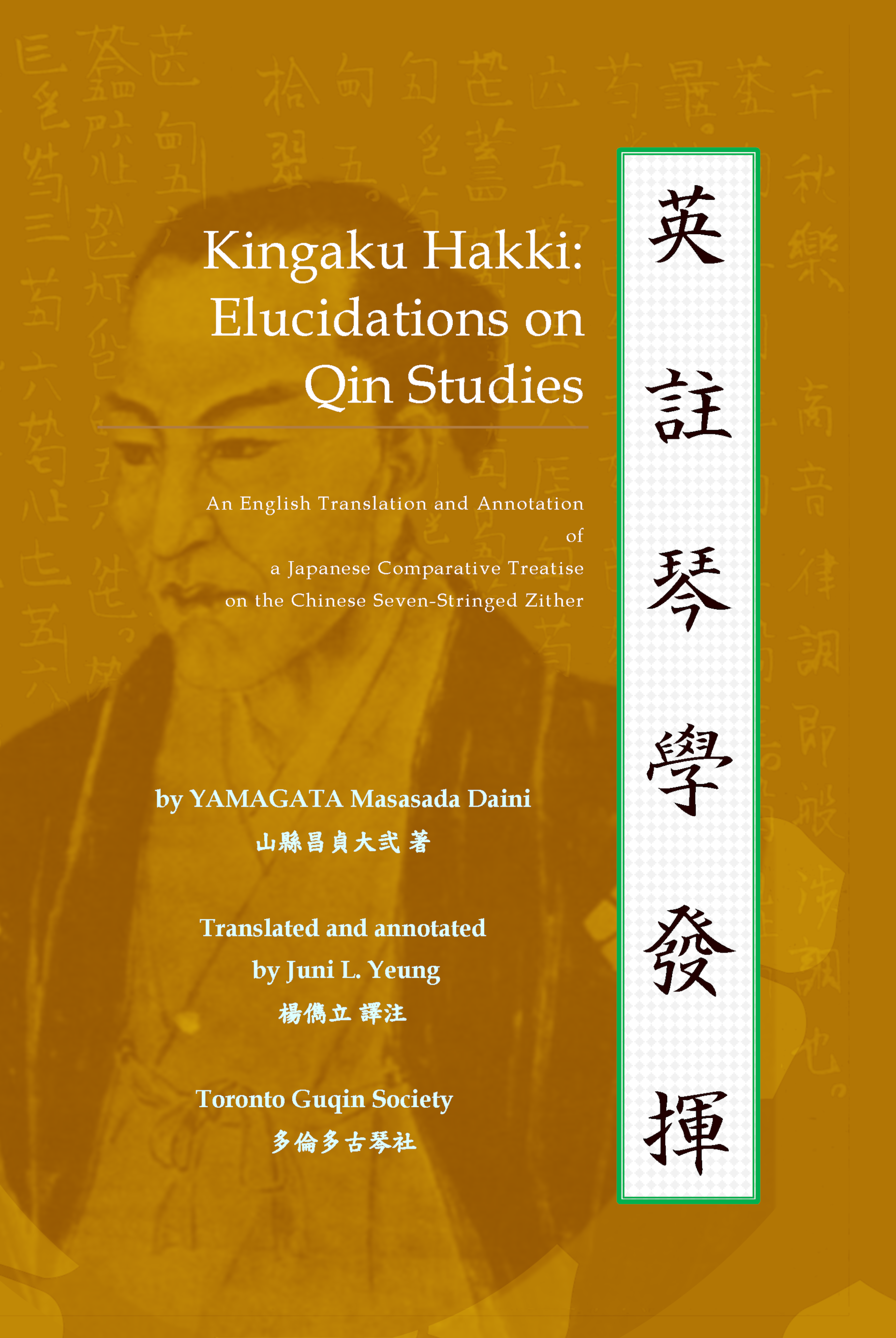
購買:https://www.lulu.com/shop/masasada-daini-yamagata-and-juni-yeung/kingaku-hakki-elucidations-on-qin-studies/paperback/product-q65d9mw.html
In 1732, Japanese Confucian scholars led by Ogyuu Sorai presented to Tokugawa Yoshimune, the eighth shogun, the result of a years-long experiment in the gardens of Edo Castle: adapting native Japanese gagaku melodies for the Chinese qin—the seven-stringed zither long associated with scholar-literati, clergy, and royalty. The tunes were Japanese, yet their rhythmic and tonal foundations deliberately followed Chinese temple music principles, reflecting a careful negotiation between cultural inheritance and intellectual independence.This synthesis had deep roots. After the fall of the Ming dynasty, Chinese refugees carried their artistic traditions and emancipatory ideas of Yangmingism across the sea, and by the 1670s Japan had become an unlikely custodian of cutting-edge Confucian ideas—especially for ritual and music, knowledge once forbidden from them. It was within this lineage that Yamagata Daini, one of Sorai’s intellectual heirs, completed his Kingaku Hakki in 1763. Drawing on Sorai’s doctrines of musical metaphysics but rejecting his rigid pentatonic orthodoxy, Yamagata developed a new series of tunings grounded in Japan’s indigenous ritsuryo scale. His system expanded beyond the limits of the pentatonic cycle-of-fifths framework, giving rise to a dynamic, locally rooted theory of musical order.Where Sorai viewed music as a reflection of moral harmony, Yamagata went further. He argued that Japan alone had preserved the authentic and meticulous science of sound, lost to China since the Jurchen and Mongol invasions centuries earlier. His treatise thus became not only a study of tone but a declaration of intellectual sovereignty: a call for the virtuous scholar to restore harmony under enlightened leadership, with music as the highest instrument of moral cultivation. Juni Yeung here decodes Yamagata Daini’s system into accessible language, for the first time expanding the scope of English scholarship beyond his political magnum opus the Ryuushi Shinron—the text that condemned him to death in 1767, yet whose ideas a century later inspired the Meiji Restoration’s quest for modernity. Kingaku Hakki emerges here as both musicological revelation and moral testament—a bridge between two civilizations and two visions of order, rediscovered for our time.Juni L. Yeung received an M.A. in History from the University of Toronto, is a seventh-generation Shu School (Chengdu Ye branch) qin player, and serves as chairperson of the Toronto Guqin Society.
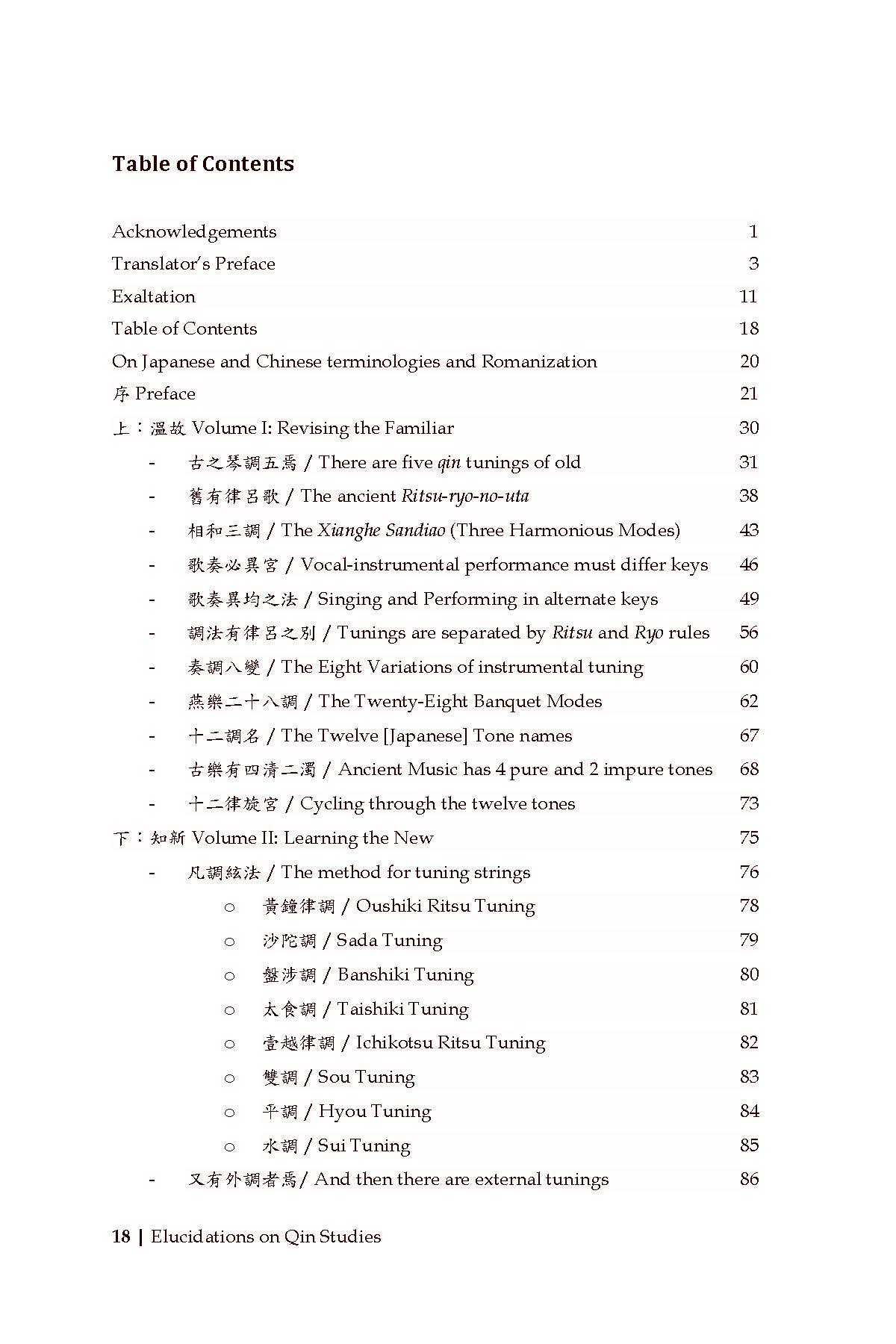
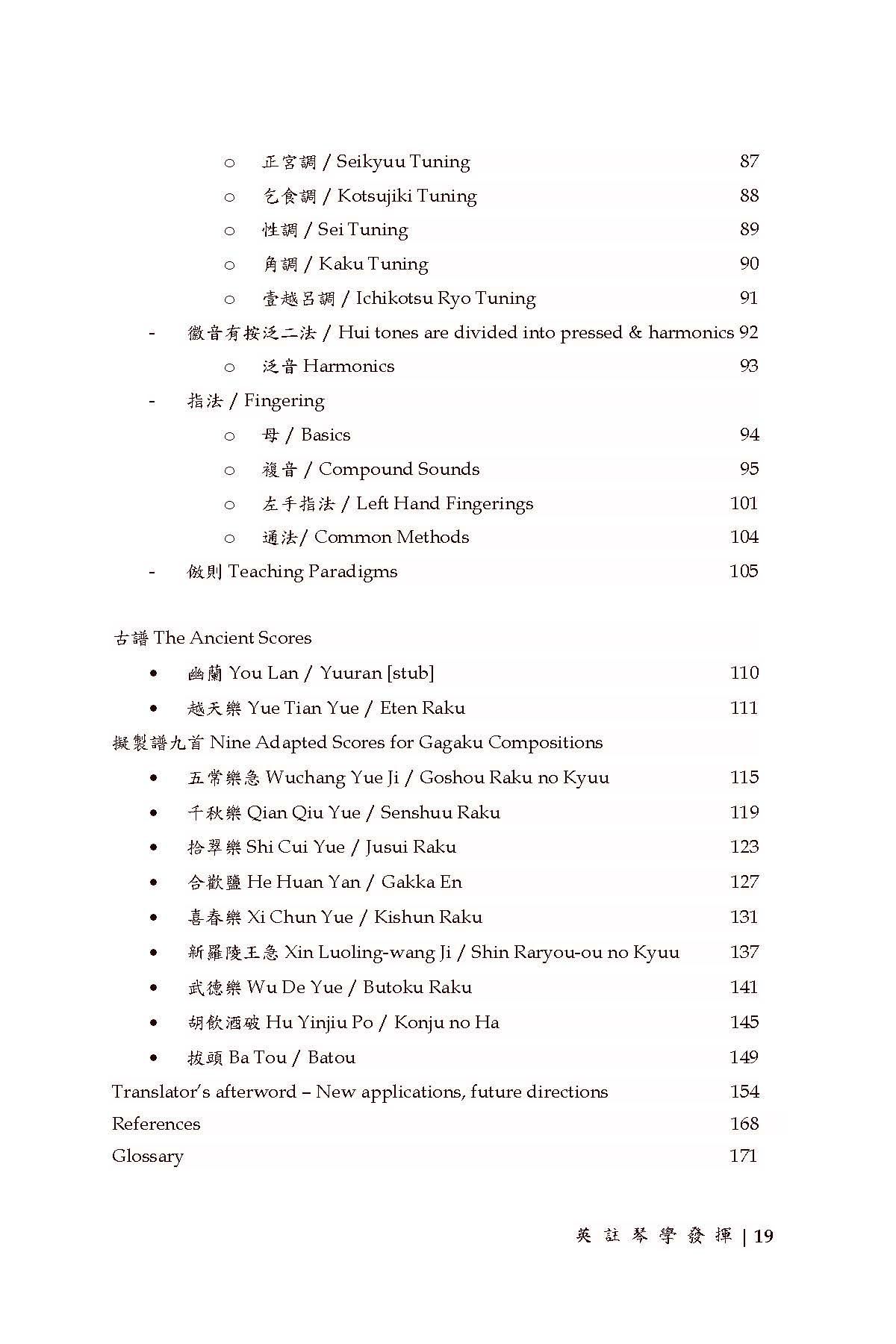
目錄:
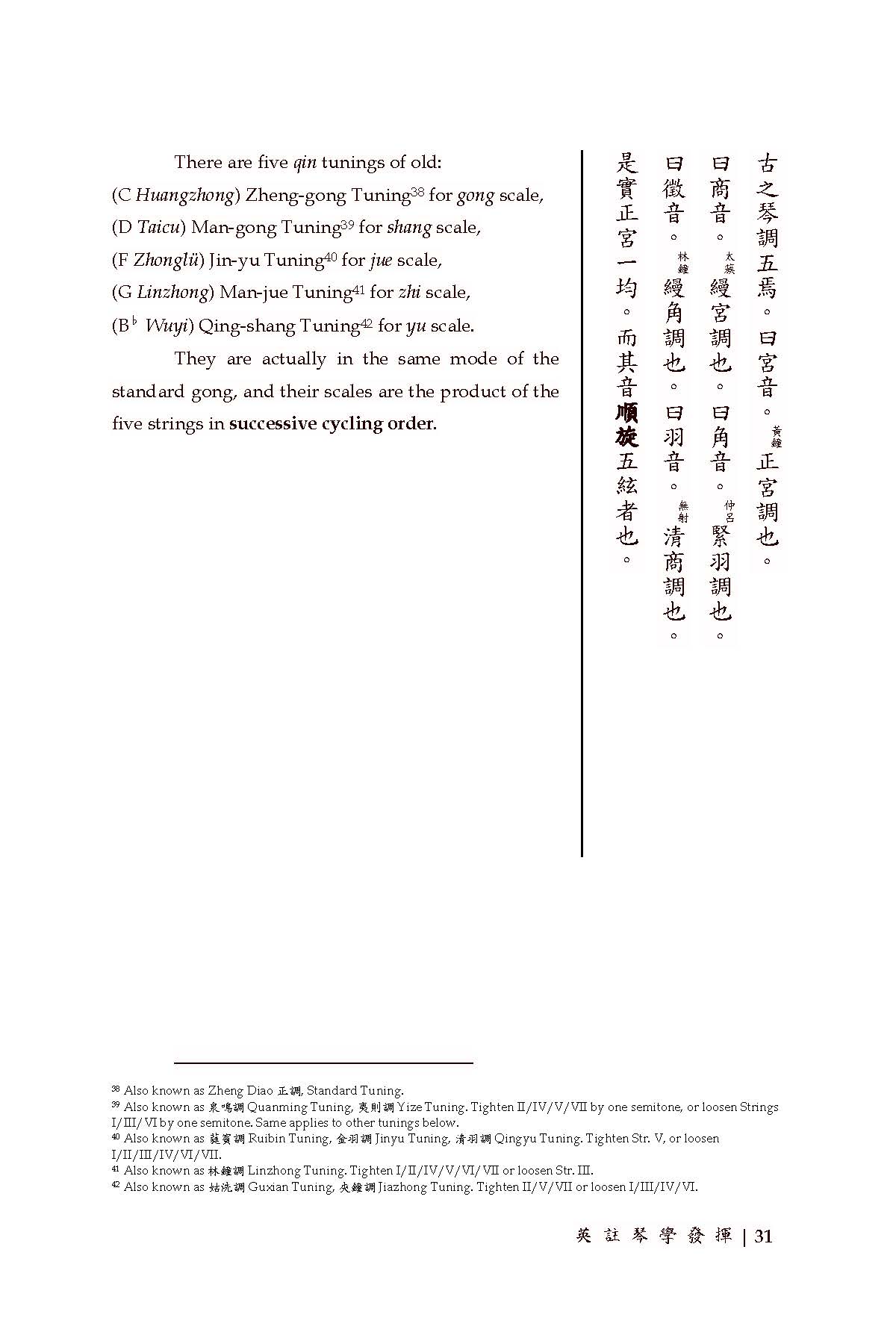
內文例子:
|



 发表于 2025-12-6 07:55:12


